Saturday, 18 March 2017

March 12th - 18th Early Days in Myanmar

Arriving back in Kathmandu, I'd intended sending some trekking gear back to the UK as I couldn't envisage using it again and didn't want to throw it away, but the post office in Kathmandu was closed, so I took it with me to Myanmar.

My itineray involved taking a flight from Kathmandu to Kuala Lumpur, and then a a connecting flight to Chiang Mai in Thailand. Both of these were with a budget airline, Malindo. The final leg of the journey involved flying with the national carrier, Myanmair Airways International, from Chiang Mai to Yangon.

So when I arrived in Chiang Mai and waited to collect my luggage from the baggage carousel, and only one of my two bags materialised, reality dawned that something was not quite right. To paraphrase Morrissey, I'd heard of other people's luggage going missing, but now it had happened to me! I made my way to one of the Thai airline offices and explained the non-arrival of half my luggage to the general disinterest of the seated staff, who carried on chomping through their late lunch, while I helped one of the team compose an email to somebody else in Kuala Lumpur to try and identify the lost luggage through a haze of physical and mental exhaustion. So I arrived in Yangon feeling very uneasy about the missing backpack ... was it still in Kathmandu, or in Kuala Lumpur or somewhere else? This was made worse by the airline failing to update me as they had promised to do later that evening. The next couple of days were spent in a state of limbo until Malindo Air finally managed to find the backpack, which had been at Chiang Mai airport all along, but had somehow become detached from its tag. You never come to appreciate the value of those mundane tags until they become detached from your belongings!  

Despite the missing luggage (miraculously i had a change of clothing to facilitate a much-needed shower), I ventured out of the hotel room when I could muster enough energy, and some aspects of Yangon life were quite striking in comparison with the places i'd visited before.

The extreme dry heat was such a contrast to the cool air of Kathmandu, and it took a fair degree of time to become accustomed to it, although it generally felt quite oppressive, and was to remain that way for most of my time in Myanmar. Similarly the variety and quality of fruit sold on the street markets was so interesting and tasted so superior to what is available in the UK: papaya, mangoes, grapes, melons, bananas etc but also fruits i'd never seen before, such as dragon fruit, and other fruits whose English names I have yet to discover, but were delicious nonetheless.

I'd anticipated reaching the downtown area of Yangon, where the hotel was located, from the airport by public transport, and was surprised to find that there was no easy access to a bus service that facilitated this (although I later discovered the location of a bus stop that was a good 25 minutes walk from the arrivals lounge, and not sign-posted), so like most visitors to Yangon, I used the pre-paid taxi service.

There are a great many taxis on the streets, mainly Toyoto Corollas, with many of the public buses looking quite dilapidated and extremely overcrowded. Most of the taxi drivers delight in eating 'paan', a confection of betel nut and tobacco, which is a fairly addictive stimulant. Generally taxi drivers would spit the red concoction out of their mouths after a short amount of chewing, and this would leave lasting and unpleasant-looking stains on their teeth. Paan is popular in India too, but it seemed less so than in Myanmar.

The multi-ethnic composition of Yangon was also very striking, and the downtown streets were reflective of this in the appearance of Hindu temples, mosques, pagodas and the odd church. Similarly the generally-dilapidated colonial buildings were a striking reminder of the long-standing British connection, and some were quite attractive in a haunting kind of way. Another interesting aspect was the relative absence of Western chain stores, with the exception of Samsung, which seems to have cornered the market in smart phones and associated paraphernalia across South Asia.

The use of thanaka, a finely ground bark that is applied to the skin as a form of sunscreen, is widely used by mainly females of all ages, but also young boys. It made me think about cultural differences in perceptions of beauty in the West and in Myanmar. I hadn't seen thanaka used in either India or Nepal, but here it was liberally applied and often used to create patterns, such as leaves, on women's faces. In the West, the application of thanaka would perhaps be thought of as unattractive, but here it was worn with grace, and I came to admire the cultural independence of thought around perceptions of beauty which thanaka seemed to represent.

Similarly I came to appreciate both the elegance and practicality of how people dressed. Men traditionally wore 'lunzhis', a kind of skirt wrapped round the waist and tied with a double twisted knot at the front, and given the extreme heat made a comfortable and practical change from walking around in long trousers.

Over the following weeks, as I spent more time in different parts of the country, the variety of patterns worn by women from diverse ethnic communities became more apparent. It made me think about cultural norms around dressing; in the West, men wearing skirts would be held up to ridicule, but in Myanmar they have none of the gendered baggage around clothing, and I found that quite refreshing.

I did purchase a lunzhi for myself, although palpably failed to wear it with the same degree of elegance as the Burmese guys who patiently tried to teach me how to wear it. Somehow I seemed to run out of material when tying it, and at times it felt quite tight, which seemed to defeat the object. The nadir of my relationship with the lunzhi was reached when I fell over it climbing a few stairs on the way to breakfast a few weeks later in Bagan, resulting in a slight cut to my hand.  It remains a mystery how the lunzhi, as worn by Burmese guys, can be raised to just below knee height without creating numerous folds. Clearly further tuition was required!

I also visited the Shwedagon pagoda, built between 6th and 10th centuries and the most sacred of all Myanmar's pagodas as it is said to contain some of the Buddha's relics. I visited in the day-time, when it soon became incredibly hot and hence painful to walk barefoot around the giant stupa, and at night, when it was much more comfortable to be there and easier to contemplate its immense beauty. The daylight photos seemed more authentic than those taken in the evening, lit by electric light. The ornate teak carvings of the roof structures were realy impressive. The Sule pagoda, considerably smaller and unfortunately situated in the middle of a busy roundabout, which spoilt its appearance, was also really impressive.

I hadn't realised the extent to which astrological beliefs hold sway amongst Theravada Buddhists. At both of these sacred sights, as well as at the Botataung pagoda, there were separate places for devotees to worship an effigy of the Buddha in accordance with their day of birth (there were two separate shrines for those born on a Wednesday i.e. midnight to noon, and from noon to midnight). Each mini-shrine depicted the animal associated with the birth day, as well as stipulating the devotees' lucky number, and worshippers would annoint the Buddha's effigy, as well as the sacred animal, with holy waters.

The central focus of a large pagoda surrounded by smaller structures that had been donated by families which housed effigies of the Buddha were in stark contrast to the pagodas I'd seen in Nepal, where the key focus is on the stupa. Both of the guides at Sule and Shwedagon pagodas complimented me on being born on a Tuesday, which meant that my animal trait was the warrior-like lion, something I share with The Lady herself, Aung San Suu Kyi, which is about as good as it can get in Myanmar! My lucky number is 8, and I was born under the constellation of Mars, hence my apparent warlike sensibilities.


Dragon fruit


Unidentified fruit


Unidentified fruit


Unidentified fruit

Unidentified fruit

Unidentified fruit

Sule pagoda


Sule pagoda


Sule pagoda


Sule pagoda

Shwedagon pagoda by day


Shwedagon pagoda by day


Shwedagon pagoda by day

Shwedagon pagoda by night

Shwedagon pagoda by night

Shwedagon pagoda by night

Shwedagon pagoda by night


Anointing the Buddha

Shwedagon pagoda by day


Colonial buildings


Colonial buildings


Saturday, 11 March 2017

March 4th to 11th Return to Pokhara

Having returned to Pokhara, I spent some time typing up this blog and generally resting up, as my calves were hurting quite a lot for a few days. I'd booked a place to stay for a few days in the Lakeside district before returning to Kathmandu to catch the flights to Myanmar, and the hotel offered me an upgrade, which meant I had a slightly better room on the upper floor, with fabulous views of the mountains.

On one of the days, I hired a boat to take me across Phewa Lake to the other side from where I was staying, which is quite a short trip. From there I climbed up to the World Peace Stupa, and it was a fairly steep but pleasant trek to the top, with great views of the lake.   Unfortunately the much-anticipated views of the Annapurna range didn't materialise as heavy low-lying clouds obscured everything. I wish I had had more time on that side of the lake, as there is a Tibetan refugee settlement which is open to the public and home to those who fled the violence of the Chinese invasion of 1959. Apparently they have maintained their language and Buddhist practise through all those painful years of exile.

I also visited the International Mountain Museum, which was an unintended consequence of a lightning strike in Pokhara, which meant that all public services ceased to function. I had intended to catch a bus from Lakeside to Begnas Tal and Rupa Tals, two small lakes a few miles from Lakeside, and go on a trek that apparently provides great views. When I'd heard of the strike, I hadn't anticipated that public bus services would be affected, but they were, hence the need for an alternative plan. Even the private tourist buses were affected, and a number of the shops were closed as well.

The International Mountain Museum was a fair trek, but manageable and well worth the effort. There was a lot of information about the people of the mountains, Nepal's diverse ethnic groups and their respective cultures, as well as the great mountains and the diferent expeditions from around the world that have scaled them over the years. The flora and fauna of the mountains received a lot of attention, and I thought the examples of equipment used by mountaineers 50 or 60 years ago, like rucksacks, gloves and boots were really interesting. It is incredible how mountaineering equipment has developed over the years, and its astonishing to think of how climbers of the past achieved what they did using such basic materials. There was also an interesting section of the exhibition space looking at Hilary and Tensing's conquest of Everest through some wonderful photographs from the time. There was also quite a depressing section looking at the influence of global warming on environmental degradation in the Himalayan region, and the devastation caused by meltwater, including flash flooding. All quite sombre but necessary. A very well-resourced museum that was more interesting than i'd expected it to be, or that my guide book had suggested it would be.

In my infinite wisdom, I had also managed to exceed the 28 day limit on my visa, which meant spending a morning at the immigration office whilst a trio of officials sat behind their desks drinking water, exchanging smalltalk and occasionally processing the odd visa application when they could be bothered whilst making sure all applicants served their time of waiting approximately two hours for applications to be processed. Oh the eternal joy of bureaucracy.

The return bus journey to Kathmandu was lit up by clear blue skies, and the distant mountains looked magnificent. It would have been the perfect day to have climbed the Peace Pagoda from the lake, as the views would have been memorable. The day I reached Kathmandu was the Hindu spring festival of Holi, which people celebrate by smearing each other with coloured paints. I've never seen so many people grinning with the joy of it, quite surreal.


Last view of the mountains


On the way to Kathmandu


Celebrating holi in Kathmandu

On the way to Kathmandu


Friday, 3 March 2017

Feb 26th to 3rd March Trek to Poon Hill

I spent a couple of days resting up and familiarising myself with Pokhara, Nepal's second city, and a haven for travellers about to embark upon their trek, or just recovering from it. Dominated by a picture-perfect lake, Phewa Tal, it felt like a tourist playground after spending time in the jungle. So much less traffic congestion than Kathmandu, and the air quality was considerably better.

I'd decided to go on another trek, having been thwarted by AMS at Manang some days before, and I spent a bit of time talking to different trekking agencies before deciding on one based at the guesthouse I spent a night at, mainly due to the really positive reviews in my guide book. There is something about the mountains that draws you to them. I've never really been that interested in climbing, but being close to them is a special feeling that's hard to describe.

So I met with the guide, Babu, who had been provided by the agency, and talked about possible routes to Poon Hill and potential treks from there, including one that led to Annapurna Base Camp (ABC). We decided to start off from the town of Nayapul, about an hour's journey from Pokhara, and then trek to Ulleri and a few other towns before reaching a village called Chomrong, and making an assessment of how I was feeling at that point before deciding how the route might pan out from there. Another consideration was the cost: Babu had a daily rate of charge, and then I needed to factor in the cost of the Trekkers Information Management System (TIMS) card, which is required for trekking in the Annapurna Conservation Area, as well as food and accommodation in the tea houses, in addition to hiring sleeping bags and rainproof footwear (which wasn't necessary in the end).

I'd explained to Babu what had happened during the earlier trek, and we looked at the altitudes of the places we would be trekking through. He was really considerate, and talking to him gave me a real sense of control over the trek in sharp contrast to going on the Annapurna trek. The guesthouse offered to store the belongings I didn't need for the trek free of charge as I'd booked it through them, which I thought was pretty decent of them.

So we set off for Nayapul, passing through the old town of Pokhara which tourists probably see infrequently, with its temples and bustling market. From Nayapul we started our trek, steadily ascending, and the views were really good. It was a warm day, and it felt great to be outdoors again, in a totally different environment to the national park. Some stunning views of rivers, tiered farmland and, of course, the mountains. During the course of the day, I came to appreciate how fortunate I was to be trekking at this time of year when the rhododendron trees (Nepal's national flower) are in full bloom, as they provide such a colourful backdrop to the mountains, and by early May they have largely gone.  They are mainly red, yet there are many varieties of them. There were also some gorgeous orchids, although far fewer of those.

After lunch at Birethati we reached Tikhedunga, and this was where the real climbing started, as we negotiated about 3,500 steps, and that was pretty tough, but made for a nice sense of achievement when we got to Ulleri, where we stayed for the night. During the day since leaving Nayapul we had climbed around 1, 800 metres. During the evening, we met with a couple of Chinese architecture students at the tea house who showed us their video footage of Tibet, which looked amazing. Over the course of the whole trek, there was immense value in taking plenty of short breaks for ten minutes or so just to catch your breath. I felt it made a real difference in offsetting tiredness, and Babu was really attentive in that respect.

The next morning from the bedroom at the tea house, I had a fantastic view of Annapurna South. The plan for the day was to walk to Ghorepani, spend the night there and then make an early morning start to watch the sunrise at Poon Hill, which on a clear day gives great views of the Annapurna range.

The terrain on this walk was very different in that we passed through largely forested areas, whereas during the walk from Nayapul, we were less immersed in the forests and more at their periphery. I preferred being in the forests, it was much cooler there with the tree cover and the glimpses of the mountains through the foliage was wonderful. Its hard to imagine a better environment in which to trek. Everywhere you looked, there were magical things to see, wonderful shapes and colours.

We stopped for lunch, and I had an interesting chat with the owner of the tea house. She had been running the place for over 30 years and lamented the changing nature of tourists, and tourism, over that time. In previous years, she felt trekkers were as interested in spending time in the mountains and finding out more about the culture of the local communities, and just appreciating the beauty of their surroundings. More recently, however, she felt trekkers were more keen to cover the terrain more quickly, which affected her business, and were more demanding of tea houses in terms of what they provided. I could appreciate her point of view, in that trekking should be about the experience rather than a race to a designated point, but perhaps people have less time to indulge themselves than they may have had before, with work responsibilities, and getting to the mountainous areas of Nepal is not an easy destination for many people. So maybe there's a natural urgency to see what you can in a short time frame.

We reached Ghorepani at around 3.30pm and it had been an exquisite walk. The tea house there was the nicest i'd stayed in with rooms that didn't resemble metal sheeting fixed together and functioning flush toilets (and hot water!). After going for a stroll round the village, I washed some clothes and dried them on the roof of the building. It had turned surprisingly cold very quickly.

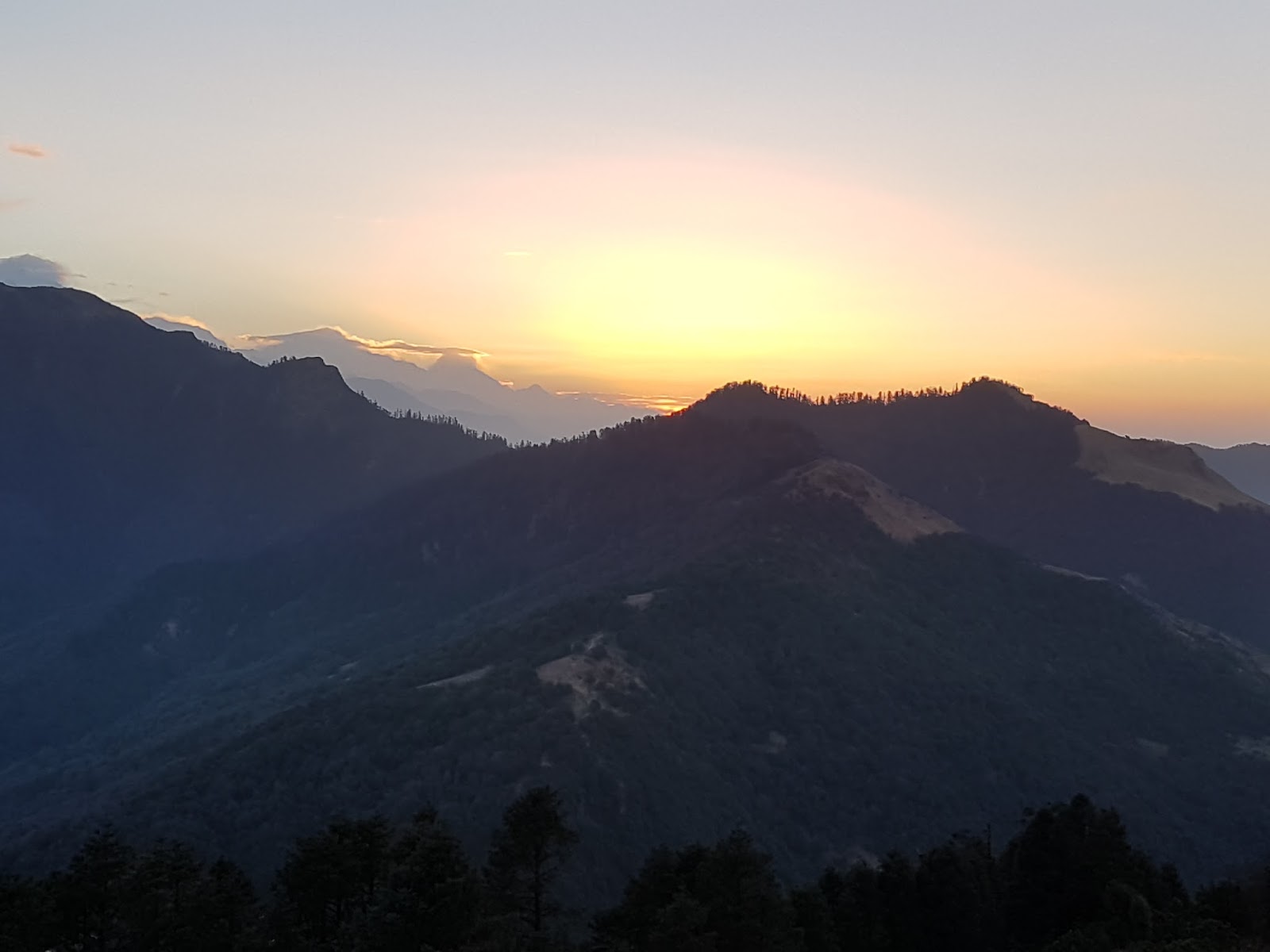
The next morning we left the tea house at around 5.30am to get to Poon Hill. From Ghorepani its a climb of about 300 metres, and i'd not trekked in complete darkness before, so it felt strange to have a torch fixed to your head as I followed Babu to the start of the pathway.  Perhaps it was due to trekking at that time of morning, but it was physically demanding, even though getting to Poon Hill only took around an hour to reach. Fortunately there was little overhead cloud, so the views were really good. We got there just as the sun was rising, and as it rose Annapurna South, Macchhupuchre, Hiunchili and the rest of the range were spectacularly revealed, although perhaps Nilgiri looked the clearest. We were so lucky to have such a clear view!

We stayed for a while, although it got pretty cold and made our way back to Snow Hill tea house for breakfast, and then set off a couple of hours later for Tatopani. This was as majestic a woodland walk as the previous day, and Babu described it as "Nepali flat", meaning there were long sections of flat walking interspersed with fairly short ascents and descents. Abundant wild flowers everywhere, as well as the glorious rhododendrons. A fantastic day's trekking, with surprisingly few other trekkers on the route.

At Tatopani, I fet really tired, more due to the early morning start than anything else. So after the hottest shower i'd ever had - there must have been a fault with the water system, it was scalding! - I slept.

The next morning we had to decide what to do next. There are hot springs at a place called Jhinu Danda, and I really fancied getting there, as well as the trek to Chomrong. However, getting to Chomrong would have meant climbing another 1,000 metres or so, and from there to get further north meant further ascents. Having got to Poon Hill, and thinking about time for resting and organising the trip to Myanmar, as well as wanting to spend a bit more time in Pokhara, I decided to continue to Ghandruk instead, spending the night there and then catching the bus back to Pokhara. Before leaving Tatopani, there were spectacular views of the Annapurna South range of mountains.

We left at around 9.30am for Ghandruk, quite a short trek, through more gorgeous woodland. After spending the night there, in the morning we were greeted with more spectacular views of Annapurna South. We then set off to catch the bus back to Pokhara.


With Babu at start of trek in Nayapul


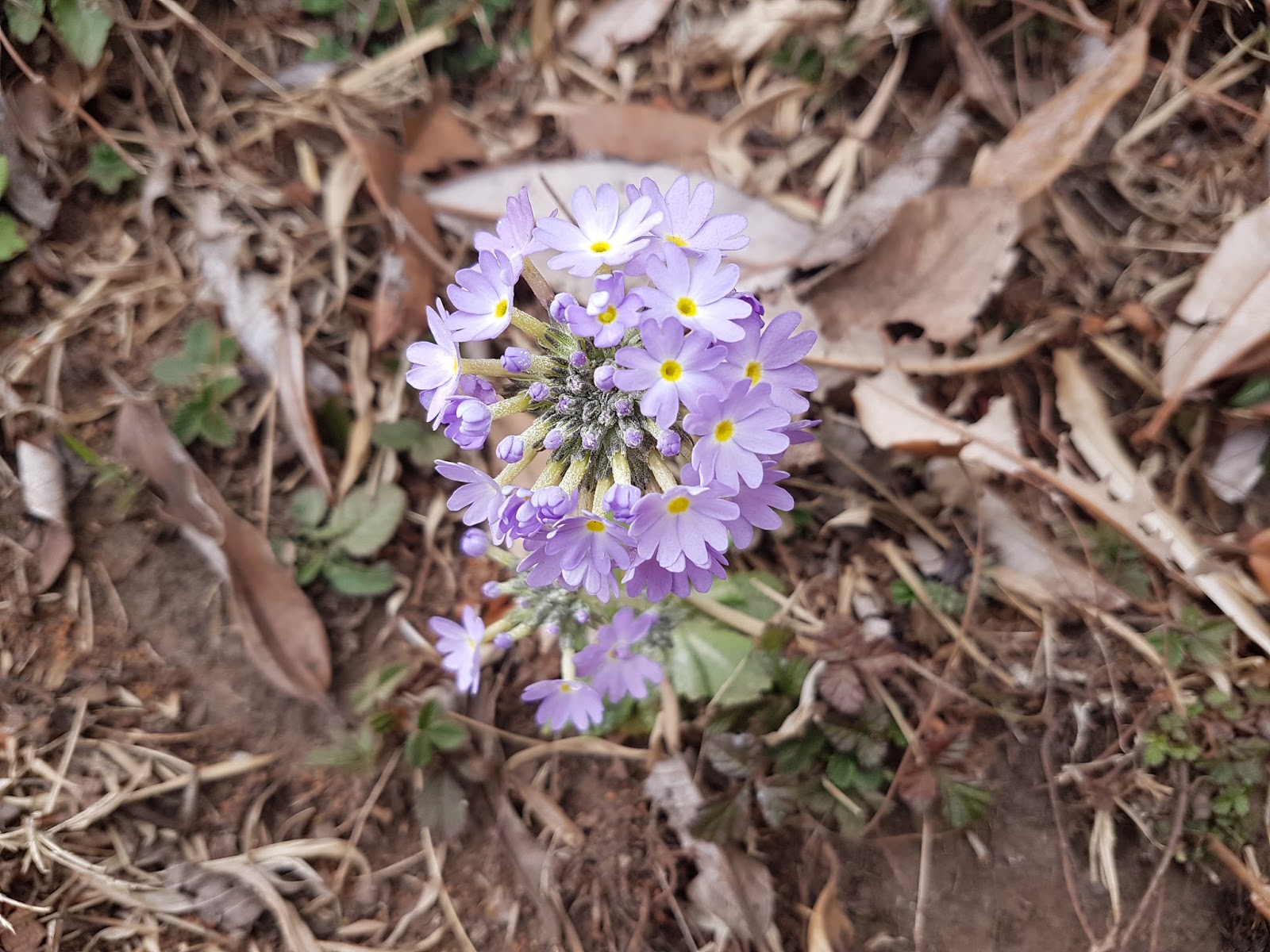
Wild flowers


Tiered farmland


Waterfall


Rhododendron


On the road to Ghorepani


In the forest


Orchids


Mountain scene


At Ghorepani


View from teahouse bedroom


Daybreak at Poon Hill


Reaching Poon Hill


Babu and me at Poon Hill


At Poon Hill


Views at Poon Hill


Views at Poon Hill

Poon Hill


Dhaulagiri from Poon Hill

Hiunchuli from Poon Hill

Annapurna South from Poon Hill


Tukuche Peak from Poon Hill


View on the way to Tatopani


View on the way to Tatopani


View on the way to Tatopani


View on the way to Tatopani


View downstream


Forest view


Forest view


Wild flowers


Rhododendron and mountains

Mountain views from Tatopani


Tatopani teahouse view


Tatopani teahouse view


Macchhupuchre (fish tail mountain) from Tatopani 


From the tea house at Tatopani

Mountain views from Ghandruk


Mountain view at Ghandruk


Mountain view at Ghandruk